
 Popular
 Games
Games






















Steal A Brainrot Unblocked
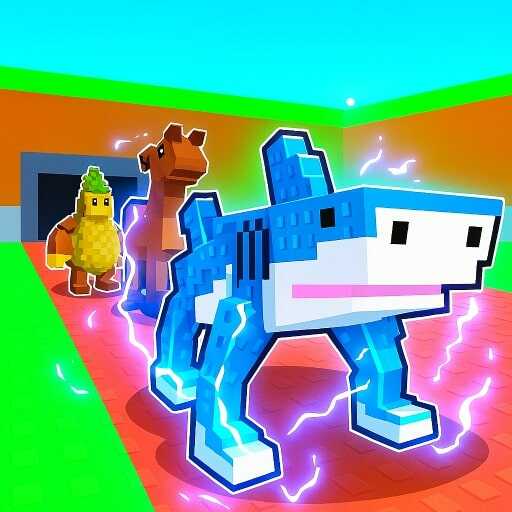
Steal a Brainrot is a Roblox tycoon game built around the "brainrot" meme characters (the Tralalero Tralala, Tung Tung Sahur, Brr Brr Patapim crowd) that have taken over short-form video. You start by buying or unlocking a Brainrot for your base, and it sits there generating money for you automatically over time, the same idle-income loop as any tycoon game. The twist, and the entire point of the name, is that every other player's base is a target and yours is too.
Each base has a shield or cooldown that protects it for a while after you visit, but once that protection runs out, anyone can walk in, grab one of your Brainrots, and start carrying it back to their own base. The catch is that stealing takes time. The Brainrot walks home at a fixed pace, the same way it would after a normal purchase, which gives the owner a window to notice the theft and physically catch the thief before it arrives. That turns the whole game into a mix of idle-tycoon management and light PvP: you are growing your income while also defending it, and raiding other bases when their shields are down.
Money earned from your Brainrots gets spent on more Brainrots, rebirths that reset your progress for a permanent multiplier, and gear like slap attacks or troll items that make stealing (or defending against thieves) easier. Rarer Brainrots earn more money but are also bigger prizes for anyone eyeing your base, so part of the strategy is deciding how much you can afford to leave undefended versus how aggressively to expand.
How to play Steal a Brainrot?
Move around with WASD and use the mouse to look around, then walk up to an unshielded Brainrot on another player's base and interact with it (left-click or E, depending on the build) to start carrying it back to your own base. Keep an eye on your own base's shield timer, since once it expires other players can do the same to you, and use your earnings to buy new Brainrots, rebirth for multipliers, and pick up gear that helps you steal or defend more effectively.
Controls
Desktop: Use WASD to move, the mouse to look around, and left-click or E to interact and steal.
Play Steal A Brainrot unblocked online
The unblocked version of Steal A Brainrot here runs 100% in-browser. With nothing to install, it works on virtually any device — including school and library computers with strict filters.
Similar games on Pizza Edition
- 2048 is a puzzle staple built around clean board management and thinking a few moves ahead.
- Block Blast is a spatial puzzle game that rewards planning for future placements instead of quick fixes.
- Brain Test is a more playful puzzle pick that focuses on reading the prompt and avoiding obvious traps.
Who created Steal A Brainrot?
Steal A Brainrot is based on the Roblox game created by SpyderSammy (DoBig Studios); this browser version is an unofficial adaptation.
Can I play Steal A Brainrot on mobile devices and desktop?
Steal A Brainrot runs in your browser on desktop. Mobile support depends on the embedded version and how well its controls translate to touch devices, so performance and usability can vary between phones, tablets, and computers.