
 Popular
 Games
Games























Stack Unblocked
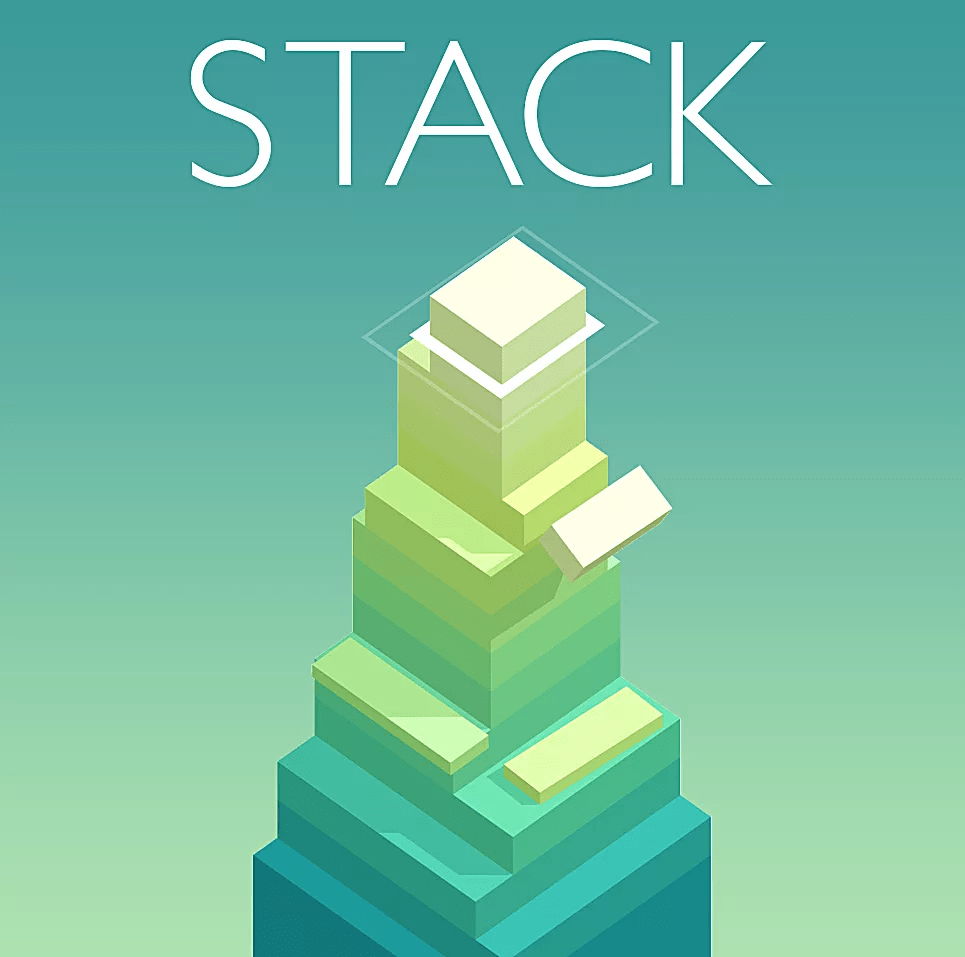
Stack is the classic block-tower game reduced to a single decision repeated as many times as you can survive: tap at the right moment to drop the moving block onto the one below it. A new block slides back and forth across the top of the tower, and every tap locks it in place and starts the next block moving. Land it flush and the tower keeps its full width. Land it off to one side and whatever overhangs the edge below gets sliced off and drops away, shrinking your landing area for the next block.
The whole game is built on that shrinking margin. Early blocks are wide enough to forgive a sloppy tap, but a few careless drops in a row narrow the tower down to a sliver, and once it gets thin, any hesitation or rushed tap ends the run. Some versions of Stack speed the sliding block up as the tower gets taller, and a few award bonus width back for a string of perfectly flush drops, which gives you a small buffer to work with if you can chain accuracy for several blocks in a row.
There is no steering or timing trick beyond the tap itself, which is what makes the game so easy to pick up and so easy to keep replaying. The skill is entirely about reading the rhythm of the sliding block and tapping on instinct rather than watching too closely and overthinking it. Most players find their best runs happen when they stop trying to be perfect on every single block and instead settle into a steady beat, accepting a slightly imperfect landing rather than freezing and missing the timing altogether.
How to play Stack?
Tap, click, or press the action key just as the moving block passes over the block beneath it. The closer the overlap, the more of the tower's width survives to the next round; any part that hangs off the edge is cut away. Keep tapping in a steady rhythm to keep the tower climbing, and try to protect your remaining width once the tower gets narrow, since a single bad drop near the top can end the run instantly.
Controls
Desktop: Click to drop each block.
Play Stack unblocked free
Stack is free and unblocked on Pizza Edition — open the page and it runs in your browser. There's no download, so restricted networks like school Chromebooks handle it without trouble.
Similar games on Pizza Edition
- 2048 is a puzzle staple built around clean board management and thinking a few moves ahead.
- Block Blast is a spatial puzzle game that rewards planning for future placements instead of quick fixes.
- Brain Test is a more playful puzzle pick that focuses on reading the prompt and avoiding obvious traps.
Who created Stack?
Stack was created by Ketchapp.
Can I play Stack on mobile devices and desktop?
Stack runs in your browser on desktop. Mobile support depends on the embedded version and how well its controls translate to touch devices, so performance and usability can vary between phones, tablets, and computers.