
 Popular
 Games
Games






















Doodle Jump Unblocked
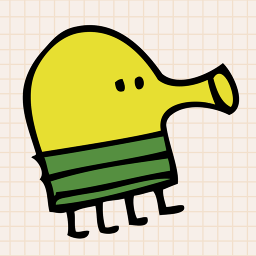
Doodle Jump is a timeless arcade platformer where your goal is simple: guide the Doodler upward through an endless vertical gauntlet of platforms. Created by Lima Sky, this deceptively straightforward game becomes addictive because every platform is a fresh decision. Do you aim for the safe route or take the riskier path? How fast can you push without overshooting into the gaps? The core loop is about climbing as high as possible before falling, getting hit by enemies, or getting abducted by a UFO.
The genius of Doodle Jump lies in how it layers complexity without overcomplicating the rules. You tap to move left and right, and the screen automatically scrolls up as you climb. Platform layouts vary randomly, forcing you to adapt on the fly rather than memorize routes. Monsters and UFOs add danger that forces precision rather than just speed. Power-ups like propeller hats and jetpacks feel like genuine rewards because they meaningfully extend your run and change how you can navigate the next stretch of terrain.
What makes Doodle Jump stay engaging across runs is how the difficulty feels earned. Early runs teach you how fast the Doodler moves, how far a jump carries, and where enemies typically appear. Once those fundamentals click, success depends on reading the randomly-generated layouts and making split-second positioning decisions. Missing a platform by one pixel costs a life, but the game never feels unfair because the controls respond immediately and consistently.
The endless structure works perfectly here because there is no artificial level progression to gate your progress. Instead, your score directly measures your skill: players who climb 50 platforms play better than those who climb 30. This creates natural, personal goals. You are not chasing an ending or a specific objective—you are testing how far up this vertical world you can take the Doodler today. Short sessions feel rewarding when you beat your personal high score, and longer play sessions feel satisfying as your consistency improves.
How to Play
Move the Doodler left and right to land on platforms as the screen scrolls upward. Avoid falling off the bottom of the screen, colliding with monsters, or being caught by UFOs. Collect power-ups when you can—they provide temporary abilities like flight or invulnerability. Stay on screen and climb as high as you can. Your score is determined by how many platforms you successfully traverse before losing all your lives.
Controls
Desktop: Use the left and right arrow keys or A and D to move left and right.
Doodle Jump unblocked — no download
This is the unblocked version of Doodle Jump, playable directly in the browser. Nothing gets downloaded to the device, so it runs fine on school or work networks where game installs are off-limits.
Similar games on Pizza Edition
- Jump Only strips platforming down to pure vertical jumping, making every platform count.
- Rise Higher combines climbing with obstacle avoidance in another endless vertical challenge.
- Blumgi Bounce layers bouncing mechanics with platform navigation for a similar endless-upward feel.
Who created Doodle Jump?
Doodle Jump was created by Lima Sky, a game studio founded by brothers Igor and Marko Pušenjak.
Can I play Doodle Jump on mobile devices and desktop?
Doodle Jump runs in your browser on desktop. Mobile support depends on the embedded version and how well its controls translate to touch devices, so performance and usability can vary between phones, tablets, and computers.